I have a lot of reading time these days. With an hour long train ride each way between work and home I get through books quicker than ever. This one is a gem.
Brief overview: The Cellist of Sarajevo
Showing posts with label Book Review. Show all posts
Saturday, 16 June 2012
Book Review: The Cellist of Sarajevo
I have a lot of reading time these days. With an hour long train ride each way between work and home I get through books quicker than ever. This one is a gem.
Brief overview: The Cellist of SarajevoThursday, 5 August 2010
Book Review: Small Island
I have been relishing this book for a few weeks now - it's a good, thick, well written one so although the story is compelling I didn't want to devour it too quickly. T chose it and gave it to me for my birthday. I love when he chooses books for me because they are almost always ones I would never have picked up myself but end up really enjoying them.Small Island is by Andrea Levy, and is set just after the Second World War in England. It is narrated by different characters, each giving their own viewpoints in a series of events that both bring them together and also tear them apart. They also reflect back on their experiences during the war, which explain how they ended up knowing one another, and the complex relationships that have developed.
It is 1948, and Queenie Bligh takes in Jamaican lodgers. Her neighbours disapprove, but her husband Bernard is not back from the war, and she is alone. Gilbert Joseph, having fought in the RAF had high expectations of life as a civilian, as does his wife Hortense, who comes over from Jamaica to join him. However the reality is a long way from their dreams and they struggle to build a life together.
I found this book fascinating as it opened my eyes to the racism experienced by soldiers who had fought with the British throughout the war, and yet were looked upon with suspicion after it. It a long way removed from the society we live in now, where turning someone down for a job because of the colour of their skin would be a shocking and illegal action - yet Gilbert faces this problem repeatedly, and is expected to not only accept it but to understand it.
Small Island is funny, sad, well written and has real depth to its plot and themes. The characters are well developed, and because they each narrate the story, you are able to understand their actions and feelings, and empathise with them even when you may not agree with them. The prizes it has won (Whitbread Book of the Year, and Orange Prize for Fiction) are well deserved and I would not hesitate to recommend it. However, I do wonder if it would be as interesting to someone who is not either British or Jamaican - the story centres so much on the two countries that I would be interested to know if a reader from the US (for example) would enjoy it as much? Let me know if you have read it - I'd love to hear your thoughts.
Tuesday, 27 April 2010
Book Review: Born Under a Million Shadows
Born Under A Million Shadows is Andrea Busfield's first novel. It is set in Kabul, Afghanistan after the Taliban have withdrawn, and follows a young boy, Fawad and his mother, Mariya. They begin a new life when Mariya gets a housekeeping job for a Western woman, Georgie, and her friends James and May. The book traces the characters as they each seek happiness, and adjust to life together. Although the Taliban no longer rule the streets the shadows of their regime remain, and threaten the lives and freedom of Fawad's friends.I found this book really interesting. Although it is not as serious or gripping as I was expecting (after reading other books set in Afghanistan), it is full of conversations and events that made me think. From Fawad trying to understand the ways of the Western women, to the adult relationships that he always finds slightly baffling, the loyalty to their country and faith shown by the Afghan characters and the message of hope and renewal that comes through the novel as a whole - it all adds up to a very interesting read.
One of my favourite things about the book is the way that Fawad's religious views come across. He is Muslim, as are all the Afghan characters, and the way that Busfield has made this such a major part of his character, his thoughts constantly turning to it, his efforts to act in line with his beliefs, is very well done. I liked that it wasn't just thrown in as an afterthought - it was clear that the author understood the impact the faith has on a person's life.
I also liked the juxtaposition of the Western and Afghan characters. The story is narrated soley by Fawad so they Westerners are often viewed with a certain amount of trepidation and bemusement - but I like the relationships that develop. Although Fawad struggles to understand them at times, this is not allowed to stand in the way of friendship.
Born Under A Million Shadows is a perfect book to take on holiday, for when you have the time to savour it, but don't want your mood dragged down by something too heavy. It's light reading but has depth to it as well. I'm sure I will read it again, and in paperback it is even light enough to stick in your bag for a picnic in the park or a day on the beach.
{Note: Macmillan US sent me a free review copy of this book but this has had no impact on the content of this review - except to say thank you to them!}
Friday, 23 April 2010
Book Review: Night Train to Lisbon
Night Train to Lisbon is the third novel of Pascal Mercier, and was originally written in German. Sometimes you can tell when reading a book in translation that it is not in the language it was created for - with The Elegance of the Hedgehog, I could tell from the first chapter. However, in Night Train to Lisbon I didn't notice that it was a translation until the end, meaning that this doesn't distract from the novel at all.It centres around a German teacher called Raimund Gregorius, living in Bern, Switzerland. Gregorius' life is repetitive, and safe, and yet a chance encounter with a Portuguese woman shakes him out of his monotonous life. He walks out of his class, and ends up in a bookshop where he finds a book of essays by a Portuguese author, Amadeu de Prado. Setting off on an impulsive trip to Lisbon to find out more about the writer and his life, he meets a number of people connected to Prado and gradually finds out more and more about his life - as a doctor, brother, friend, resistance worker and philosopher. Delving into the past he looks back on his own life, the choices he has made, the relationships he has forged and lost, and wonders at what a man's potential really is.
I found this book hard work at first. Gregorius seems a dry, rather unemotional character, and it was hard to get attached to him. My overwhelming feeling towards him was pity, that his life seemed so joyless and empty. However, his interactions with the people in Lisbon, those who knew and clung to Amadeu de Prado, his compassion for them, makes him a far more likeable figure. He has the distance of an outsider, and releases them from the past by listening and asking, and finally, seeing what they cannot.
Amadeu de Prado is much easier to be interested in. He is fiery, passionate, pursues ideas with all he has, and engages in complex lifelong relationships with others. The contrast between Prado, and the man obsessed with his life, is one of the most fascinating aspects of the novel.
Part of the reason I found Night Train to Lisbon hard work was that it is narrated by Gregorius the whole way through. He is a thoughtful, considering figure, not an action hero. I could feel the distance between him and the other characters and needed to leave the book every few chapters to be in a more lively world. It's not a light beach read or even one to cosy up with in bed. It takes thought and effort. However, it is worth persevering with, and it is rewarding when you finish it.
Overall I would recommend this to someone looking for a thought-provoking book. I can certainly see myself going back to it as I'm sure there is more to it than I got from the first read. This book has depth, and is well worth your time, just don't expect it to be easy.
Saturday, 27 March 2010
Book Review: The Elegance of the Hedgehog
I actually finished this about a week ago but have been putting off writing my review because I couldn't quite work out my thoughts. However, as a few people have specifically requested a review, I am finally giving myself a kick and here it is. Oh, and yes, I did pick it purely because the title is lovely.The Elegance of the Hedgehog is written by Muriel Barbary, orginally in French. As my French skills are basic (which is being generous), I read it in the English translation by Alison Anderson. The novel is jointly narrated by Renee, a concierge in a Paris apartment building filled with rich people, and Paloma, a twelve year old girl, living with her family in one of these apartments. They are both highly intelligent - Renee hides her intellectual capabilities behind the facade of being a "typical concierge", and Paloma, scornful of the shallowness she sees in her family and neighbours, plans to commit suicide and burn down her parents' apartment on her thirteenth birthday. A new inhabitant, Monsieur Ozu sees right through Renee's mask, and the two begin a friendship based on great appreciation for art and literature. Simultaneously, both get to know Paloma better and the three become friends.
I found the beginning of the novel extremely dull - I struggled through the first third of the book before all of a sudden it became fascinating and I couldn't put it down. At first I thought this was frustrating and badly done - the reader is made to work so hard to get through the first section, which is full of pontificating and pretension. Then I realised that the book reflects the lives of Renne and Paloma - at first they are trudging through, desperately looking for moments of beauty and profundity. It is only when Monsieur Ozu arrives in their lives (and in the book) that action is forced, there suddenly seems to be light and life in everything. So, frustrating as it was to have to struggle though the beginning (and I wouldn't blame anyone for giving up on the book) - it is worth it.
The main characters I found to be a little odd, but somehow their developing relationships made them understandable and likeable. However I thought the secondary characters were characatures, and not very believable. On the other hand, maybe that was deliberate - they are shallow, and have no depth, and that is reflected in how they are described and portrayed. I haven't read many books set in Paris, and found that aspect of it interesting.
The ending (which I won't give away), I thought was unnecessary and I was a little disappointed by it - but you'll have to read it yourself and let me know your thoughts.
In conclusion - I do think this is worth reading, but it's not one of my favourite books of all time. It's the kind of book that is stuffed full of essay material - I can appreciate it, coming from an English Lit degree, but it might not be everyone's cup of tea. If you're looking for an easy read, this isn't for you - if you're wanting something a bit challenging in writing style, this could be it.
Tuesday, 16 March 2010
Book Review: Handle With Care
Handle With Care is Jodi Picoult's 16th novel, and follows her usual themes of family, relationships and making difficult choices. I choose to take a break from the more challenging The Elegance of the Hedgehog while we were away in Devon so took this one with me instead. Jodi Picoult's books do centre around challenging dilemmas and issues which is why I often find them so interesting, but in writing style it is a lot simpler than Muriel Barbary's work, so it was a bit more relaxing to read.Handle With Care focuses on a family whose five year old daughter (Willow) has brittle bone disease. The medical bills are getting too much for them to cope with but they are offered a way of paying for her care and providing for her future by suing their OB for "wrongful birth". The idea is that Willow's condition should have been diagnosed earlier and her mother, Charlotte, would then have had the option of aborting the pregnancy earlier. The case is complicated by the fact that the OB in question is Charlotte's best friend (Piper), and that Willow's father, Sean, doesn't support the lawsuit. Throughout the case, the two families go through ups and downs, get pulled apart and fight to work out what the "right choice" is.
Although I did enjoy the book and found it interesting, I don't think it is one of Picoult's best. I've read quite a few of her others - Mercy, Plain Truth, Perfect Match, My Sister's Keeper, Vanishing Acts, Nineteen Minutes and Change of Heart - and I was a little disappointed by this one. It is still readable and interesting, and I still like the way you get the story told from so many different characters' viewpoints, you see how each person is dealing with the situation. However, I don't think it was that compelling a dilemma. The book twisted the ideas to make Charlotte's choice it appear more awful than it actually should have been. I think the ending was obvious but with a twist that seemed just there for the sake of being a twist, just to shock the reader. If you've never read Picoult before, I wouldn't start with this book - try My Sister's Keeper or Plain Truth instead. If you are a fan of Picoult, you might like to try this one for yourself anyway.
Friday, 26 February 2010
Book Review: A Thousand Splendid Suns
Brief overview: A Thousand Splendid SunsI loved this book. I don't know a lot about Afghanistan, despite the media focus on it in the last decade, so from that point of view it was interesting. What I really liked was that it shows so many aspects of relationships and human interaction - the jealousy, rivalry and shame alongside loyalty, love, courage and compassion.
I'd wanted to read this since reading The Kite Runner and I wasn't disappointed. If anything, I liked it more - it was more open, less about pride and honour, more about love and friendship. It was less harrowing, more beautiful. It does still have difficult themes, but it's the struggle and the overcoming of obstacles that makes this story, that earns its ending. The fact that it is set in a real place, describing fictional characters enduring real events, that have probably been endured by real people is hard to read but it does reveal the human side of a very politicised conflict, making it all the more thought provoking. *Amazon Affiliate Link included. Please see 'I am' page for more info. Thanks!
Friday, 19 February 2010
The Current Stack
It's been book week around here lately. I just finished reading The Invention of Everything Else by Samantha Hunt. It was ok. In my list of all books I've ever read it comes below The Children's Book, a very long way below The Time Traveler's Wife, and far far above White Teeth.
It was interesting but not gripping. I didn't really care what happened in the end, and sometimes it was hard to follow - you'd read a conversation and then find out that one of the participants has been dead twenty years and it's all in the other person's head. It was a bit too pleased with being clever for my liking. Which makes it sounds awful and it wasn't at all. I did like the deatils of everyday life, the forays into the past and how the characters got to where they are. Those things gave it a bit of depth. So not great but not bad either. If you get a chance to read it and the blurb interests you, I'd say go for it - otherwise I wouldn't bother seeking it out.
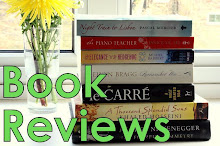
Anyway, on to the main point of this post. This is my current stack of books to be read:

{Top to bottom: Night Train to Lisbon, The Piano Teacher, The Elegance of the Hedgehog, Remember Me, A Most Wanted Man, A Thousand Splendid Suns, Her Fearful Symmetry.}
So my questions - which should I read next? Have you read any of them and what were your thoughts? Or do you have any recommendations to add to the stack?
It was interesting but not gripping. I didn't really care what happened in the end, and sometimes it was hard to follow - you'd read a conversation and then find out that one of the participants has been dead twenty years and it's all in the other person's head. It was a bit too pleased with being clever for my liking. Which makes it sounds awful and it wasn't at all. I did like the deatils of everyday life, the forays into the past and how the characters got to where they are. Those things gave it a bit of depth. So not great but not bad either. If you get a chance to read it and the blurb interests you, I'd say go for it - otherwise I wouldn't bother seeking it out.
Anyway, on to the main point of this post. This is my current stack of books to be read:
So my questions - which should I read next? Have you read any of them and what were your thoughts? Or do you have any recommendations to add to the stack?
Tuesday, 16 February 2010
Book Review: The Children's Book
I liked The Children's Book (by A.S. Byatt) a lot. For a number of reasons...1. It was so densely packed with characters and storylines - they all intermingled with the same level of complication you get in real life with real people. There was growing up, love, death, secrets, war, peace, pain, loss, birth, joy, art, history, writing, travel, girls, boys, the old and the young.
2. It's thick. It took me a couple of weeks to read. There was time to get to know the characters, and to get interested in their lives.
3. It's pretty. It's blue and gold and pretty.
4. It wasn't predictable. Again like life, some people did what you'd expect, others not at all. I didn't see the events unfolding before they'd started.
5. There is an undercurrent of bohemian artsy creativeness. There are writers, potters, jewellery makers and painters. But there are also bankers, feminists, doctors, teachers and maids. And they're all fascinating.
These are just a few of the reasons I'd recommend this book. Have you read it? Did you like it?
Friday, 6 November 2009
Book Review: Beijing Coma
I borrowed Beijing Coma by Ma Jian from T's mum. She'd asked for it for her birthday after a trip to China.The book's two narrative strands centre around Dai Wei, a young chinese man. In one he is growing up, at school and university, in the years, months and days leading up to and including the Tiananmen Square protests. In the other he is in a waking coma after being shot in the protests. His mother cares for him and friends visit and bring news of a changing China as they move on with their own lives.
The thing that struck me most was how trapped Dai Wei is - he describes his body as a "fleshy grave". The split plot emphasises even more the drastic change in his life - the juxtaposition of him as a passionate, active young man with a girlfriend and grand plans for his future, and the completely helpless man, a mind trapped in a body it can't control.
The protests plot didn't completely grip me - I was constantly confused by the many many characters constantly being introduced and I found the time scale quite unclear. I'm still not sure if the protests lasted weeks or days. I found some of the detail to be unnecessarily graphic, which made me want to put the book down. I think I struggled with the book because I like to see some humour or beauty of happiness in a story. I didn't get much of that from Beijing Coma, and I found a lot of the characters quite cold, it was hard to identify with them or get emotionally invested in the book. However, it has piqued my interest. I've seen a huge gap in my knowledge here and I'd like to find out more.
Not one I'd rush to recommend to a friend, I did have to push myself to keep going with it, but it was well written.
Tuesday, 25 August 2009
Book Book Book
Since my last book review I have managed to do a lot of reading. It has been blissful. So I wanted to share!
Just before our holiday I finished The Guernsey Literary and Potato Peel Pie Society. I loved this book. Loved it. It was beautifully written, as a series of letters between friends. I wouldn't usually go for a book in letter form but I couldn't resist this title. It is witty and humourous with the most wonderfully eccentric characters, yet is set in a post-WW2 England/Guernsey. The pain of the characters trying to rebuild their lives after the war gives the book a serious undercurrent that stops it falling into the "fluffy" category.
On holiday I took three books. The first, The Villa in Italy by Elizabeth Edmondson is light hearted. A group of four strangers are summoned to the Villa Dante by the will of Beatrice Malaspina. None of them have ever heard of her before. The mysterious Beatrice forces them all to reveal and come to terms with their own dark pasts before they come into their inheritance. I thought the characters in this were well developed and engaging. I'd asked for it for my birthday because I'd previously enjoyed Edmondson's The Frozen Lake and I wasn't disappointed, I'm sure I'll read this again.
The next book was Mary Lawson's The Other Side of the Bridge, a book with a lot less joy in it than the last two. It focuses on two brothers - Arthur (quiet and dutiful) and Jake (reckless and manipulative). It is written in split times - one storyline as the boys grow up before Jake leaves, the other fifteen years later when he returns. This is a story about growing up, being torn between the expectations and hopes of others and your own wishes. I liked this book although I did miss the cheerfulness in my other reads. It is thought provoking and although none of the characters are very likeable, they are interesting and realistically portrayed.
The last book of my holiday was The Kite Runner by Khaled Hosseini. I found this harrowing to begin with. I hadn't read it before for this reason, although I'd heard good things about it. Once I got into it I was glad I'd started - it is set in Afghanistan, a culture I know next to nothing about. It also had characters with depth. The story was moved by their strengths and weaknesses - you could see how their decisions were made and why, and the consequences of those decisions.
I'd recommend all these books. They're very different in style and content but all equally worth your time.
I also raided T's grandma's bookshelves while we were in Anglesey (with her encouragement!) and added The Road Home (Rose Tremain), The Photograph (Penelope Lively), The Zahir (Paulo Coelho) and The Interpretation of Murder (Jed Rubenfeld) to my stack. I've taken The Tsarina's Daughter and some other books on holiday. So even more words to come. Looking forward to it!
I loved your comments last time - what else have you been reading? Any other recommendations for me?
Just before our holiday I finished The Guernsey Literary and Potato Peel Pie Society. I loved this book. Loved it. It was beautifully written, as a series of letters between friends. I wouldn't usually go for a book in letter form but I couldn't resist this title. It is witty and humourous with the most wonderfully eccentric characters, yet is set in a post-WW2 England/Guernsey. The pain of the characters trying to rebuild their lives after the war gives the book a serious undercurrent that stops it falling into the "fluffy" category.
On holiday I took three books. The first, The Villa in Italy by Elizabeth Edmondson is light hearted. A group of four strangers are summoned to the Villa Dante by the will of Beatrice Malaspina. None of them have ever heard of her before. The mysterious Beatrice forces them all to reveal and come to terms with their own dark pasts before they come into their inheritance. I thought the characters in this were well developed and engaging. I'd asked for it for my birthday because I'd previously enjoyed Edmondson's The Frozen Lake and I wasn't disappointed, I'm sure I'll read this again.
The next book was Mary Lawson's The Other Side of the Bridge, a book with a lot less joy in it than the last two. It focuses on two brothers - Arthur (quiet and dutiful) and Jake (reckless and manipulative). It is written in split times - one storyline as the boys grow up before Jake leaves, the other fifteen years later when he returns. This is a story about growing up, being torn between the expectations and hopes of others and your own wishes. I liked this book although I did miss the cheerfulness in my other reads. It is thought provoking and although none of the characters are very likeable, they are interesting and realistically portrayed.
The last book of my holiday was The Kite Runner by Khaled Hosseini. I found this harrowing to begin with. I hadn't read it before for this reason, although I'd heard good things about it. Once I got into it I was glad I'd started - it is set in Afghanistan, a culture I know next to nothing about. It also had characters with depth. The story was moved by their strengths and weaknesses - you could see how their decisions were made and why, and the consequences of those decisions. I'd recommend all these books. They're very different in style and content but all equally worth your time.
I also raided T's grandma's bookshelves while we were in Anglesey (with her encouragement!) and added The Road Home (Rose Tremain), The Photograph (Penelope Lively), The Zahir (Paulo Coelho) and The Interpretation of Murder (Jed Rubenfeld) to my stack. I've taken The Tsarina's Daughter and some other books on holiday. So even more words to come. Looking forward to it!
I loved your comments last time - what else have you been reading? Any other recommendations for me?
Wednesday, 12 August 2009
December - a Book Review
I'm away on holiday with T and his family at the moment but I thought of you lovely people and set this up to appear. In the first week of the summer holidays, I made a start on my summer reading stack. Here it is...

I'm relishing knowing that all these lovely words are waiting in my near future. Anyway, this was book number one - December by Elizabeth H. Winthrop.

The story focuses on the Carter family - mum Ruth, Dad Wilson and eleven year old Isabelle. Isabelle has not spoken in nine months and her parents are increasingly desperate to help their daughter as her school and countless therapists give up.
I liked that each character's viewpoint and struggles with the situation were given - you can see how their actions and reactions, words and silences affect those who love them. This is definitely a story about families, how you can love them even when they are hurting you or you them, how sometimes you can have the same goal but be on totally different wavelengths about how to get there. It's also about the little joys of being a family, the things you notice and appreciate, the things you would miss if one day they weren't there.
If you're looking for something that will draw you through its pages, make you think and make you smile this is a good option. It's not my favourite book ever but I will be keeping it on my shelf and will probably pick it up and read it again in the future. It's not light fluffy reading but it's well written and well worth a few hours of your summer.
While I am away this week I have taken...
What are you reading? Any recommendations to add to my rapidly deteriorating stack?
I'm relishing knowing that all these lovely words are waiting in my near future. Anyway, this was book number one - December by Elizabeth H. Winthrop.

The story focuses on the Carter family - mum Ruth, Dad Wilson and eleven year old Isabelle. Isabelle has not spoken in nine months and her parents are increasingly desperate to help their daughter as her school and countless therapists give up.
I liked that each character's viewpoint and struggles with the situation were given - you can see how their actions and reactions, words and silences affect those who love them. This is definitely a story about families, how you can love them even when they are hurting you or you them, how sometimes you can have the same goal but be on totally different wavelengths about how to get there. It's also about the little joys of being a family, the things you notice and appreciate, the things you would miss if one day they weren't there.
If you're looking for something that will draw you through its pages, make you think and make you smile this is a good option. It's not my favourite book ever but I will be keeping it on my shelf and will probably pick it up and read it again in the future. It's not light fluffy reading but it's well written and well worth a few hours of your summer.
While I am away this week I have taken...
What are you reading? Any recommendations to add to my rapidly deteriorating stack?
Saturday, 9 May 2009
Books
I realised yesterday that I completely forgot to finish my Kreativ blogging thing. It kind of got lost in other things. Oh and my smart little sister told me a few weeks ago that "kreativ" is just German for creative. That didn't take a huge leap of imagination but somehow I hadn't figured that one out. Well done Bronnie.
So - Books.
I love reading. It's actually the main reason I picked English Lit as my degree subject. I actually looked forward to working on my third year dissertation, as we got to choose what we read and the topic. Mine was on "The Role of the Gentleman in Nineteenth Century Literature" and I wrote about some fantastic books*. Since I was a little kid I've been perfectly happy reading for hours on end, often I'd be sent to tidy my bedroom and two hours later my parents would look in to find my room in the same state and me on my bed with a book.
My main problem these days is that I'm a pretty fast reader and so I can easily finish a book in a day. Which means I run out of new books to read quite quickly. Luckily there are some books I just love to read over and over, and that I'm quite happy to go back to. My favourite book is one most readers have probably heard of and read already (If not, please go find a copy and read it. When you've finished reading this.) - The Time Traveler's Wife by Audrey Niffenegger. It's a beautiful love story with a twist (in that one of the couple is a time traveller), and it follows Clare and Henry's relationship from their first meetings through to the end of their lives. If the time traveling thing sounds too sci-fi for you try to ignore it, it doesn't feel like a sci-fi novel at all.
I've just finished reading Carole Sheilds' Unless, about a woman writer (Rita) whose daughter drops out of college to sit at the side of a road with a sign reading "Goodness". I love the mundane detail of the family's lives, even as they are trying to work out why Norah is behaving like this. Rita wonders about women's roles in the world - are they, even in 2004, taken seriously as equal citizens? - and about goodness as a quality. It's quite different to most of my reading but I'd definitely recommend it, even just for its difference to a lot of modern writing about women. It's very introspective but also considers the place of women in family life, society and the world.
* All the Jane Austen novels, North and South by Elizabeth Gaskell, David Copperfield by Charles Dickens and The Importance of Being Earnest by Oscar Wilde were my favourites.
So - Books.
I love reading. It's actually the main reason I picked English Lit as my degree subject. I actually looked forward to working on my third year dissertation, as we got to choose what we read and the topic. Mine was on "The Role of the Gentleman in Nineteenth Century Literature" and I wrote about some fantastic books*. Since I was a little kid I've been perfectly happy reading for hours on end, often I'd be sent to tidy my bedroom and two hours later my parents would look in to find my room in the same state and me on my bed with a book.
My main problem these days is that I'm a pretty fast reader and so I can easily finish a book in a day. Which means I run out of new books to read quite quickly. Luckily there are some books I just love to read over and over, and that I'm quite happy to go back to. My favourite book is one most readers have probably heard of and read already (If not, please go find a copy and read it. When you've finished reading this.) - The Time Traveler's Wife by Audrey Niffenegger. It's a beautiful love story with a twist (in that one of the couple is a time traveller), and it follows Clare and Henry's relationship from their first meetings through to the end of their lives. If the time traveling thing sounds too sci-fi for you try to ignore it, it doesn't feel like a sci-fi novel at all.
I've just finished reading Carole Sheilds' Unless, about a woman writer (Rita) whose daughter drops out of college to sit at the side of a road with a sign reading "Goodness". I love the mundane detail of the family's lives, even as they are trying to work out why Norah is behaving like this. Rita wonders about women's roles in the world - are they, even in 2004, taken seriously as equal citizens? - and about goodness as a quality. It's quite different to most of my reading but I'd definitely recommend it, even just for its difference to a lot of modern writing about women. It's very introspective but also considers the place of women in family life, society and the world. * All the Jane Austen novels, North and South by Elizabeth Gaskell, David Copperfield by Charles Dickens and The Importance of Being Earnest by Oscar Wilde were my favourites.
Wednesday, 15 April 2009
An Update
We've been home two days now and I've only just got around to checking in on all the blogs I read. A lot has been happening in blog world, some good and some bad and it feels nice to get back to it. I like blogging and reading blogs.
Over the weekend I borrowed The Glassblower of Murano from my Mother-in-Law. We actually gave it to her for Christmas and it looked good when I was shopping so I was very pleased when she brought it out and suggested I borrow it. It's good, I'd recommend it. It's got one of those split plots - half in the past, half the present - that run alongside one another. It's an easy read and good storylines (enough historical and personal stuff to hold your attention in both halves of the book). The main character goes to Venice to follow in the footsteps of her ancestor, a legendary glassblower. The reaction from locals is varied - she is welcomed, ostracised and taken advantage of in equal measure, and eventually creates herself a life in Venice apart from her famous ancestor.I have this week off (from both jobs) and so far I have used the time to catch up on some house jobs. As of next Monday I'll be working four sessions a week at the playgroup. I have to get to know a new set of children (the younger, afternoon group I'll be working with on Mondays and Wednesdays). Besom time will be reduced which will be very sad but it is only for one term. I'm hoping that by the end of this term I will have some plan for what to do next. That would be good. On the other hand I spent three years at university hoping that by the end I'd have some plan for what to do next and look how that turned out. Watch this space.
This weekend my family are coming to stay. That means six people crammed in our little house. Hopefully the weather will be good - I really want us to go and see the beautiful park nearby. In the last week trees outside our house have come into leaf and are looking lovely. It's so much nicer to look out on than bare branches.
Sunday, 22 February 2009
The Painter
One of the things I love most is settling down with a new book and a cup of tea. On the last visit we made to my parents I raided Mum's bookshelves and borrowed The Painter by Will Davenport. I finished last night so here are a few thoughts on the book (without spoiling the story).
1) The book uses the popular parallel plot format - one based in 1662, the other in 2001. The 1662 one is about Rembrandt who stows away on a ship, ends up in Hull and is drawn into a contest of arts with the poet Andrew Marvell - the prize being the ship captain's beautiful wife (Amelia Dahl). I thought this plot was reasonably intriguing and clever. The 2001 plot works less well in my opinion. It focuses on artist Amy Dale who is a descendant of Amelia Dahl's. She gets a job in helping to restore the captain's house and happens to find Amelia's journals from 1662 detailing her encounter with Rembrandt. There is also a minor plot involving some of the builders working on the project which I found it hard to care about and easy to predict.
2) I found Amy an unconvincing character. A lot is made of her attractiveness and Davenport seemed too concerned with making her seem unique and unusual to make her someone the reader could identify with.
3) Overall The Painter was a reasonably engaging read but certainly not high quality literature and it wouldn't be one I'd go out of my way to recommend to a friend.
I'll be writting about some more books in the future and the reviews certainly won't all be this negative - I just thought I'd give it a go as I'd just finished a book.
1) The book uses the popular parallel plot format - one based in 1662, the other in 2001. The 1662 one is about Rembrandt who stows away on a ship, ends up in Hull and is drawn into a contest of arts with the poet Andrew Marvell - the prize being the ship captain's beautiful wife (Amelia Dahl). I thought this plot was reasonably intriguing and clever. The 2001 plot works less well in my opinion. It focuses on artist Amy Dale who is a descendant of Amelia Dahl's. She gets a job in helping to restore the captain's house and happens to find Amelia's journals from 1662 detailing her encounter with Rembrandt. There is also a minor plot involving some of the builders working on the project which I found it hard to care about and easy to predict.
2) I found Amy an unconvincing character. A lot is made of her attractiveness and Davenport seemed too concerned with making her seem unique and unusual to make her someone the reader could identify with.3) Overall The Painter was a reasonably engaging read but certainly not high quality literature and it wouldn't be one I'd go out of my way to recommend to a friend.
I'll be writting about some more books in the future and the reviews certainly won't all be this negative - I just thought I'd give it a go as I'd just finished a book.
Subscribe to:
Comments (Atom)